Teaching The Engineering Design Process
Table Of Content
- Steps of the engineering design process
- And for more articles like this, be sure to sign up for our free newsletters to find out when they’re posted!
- Force and Motion Unit! STEM Challenge:Designing a Playground.
- Unlock Worksheet Sets
- Activity Extensions
- Tsunami STEM Activity (Surviving a Tsunami in the Village Challenge)
- Engineering design process worksheets, activities and rubrics
- Scientific Method Worksheet & Example for Kids
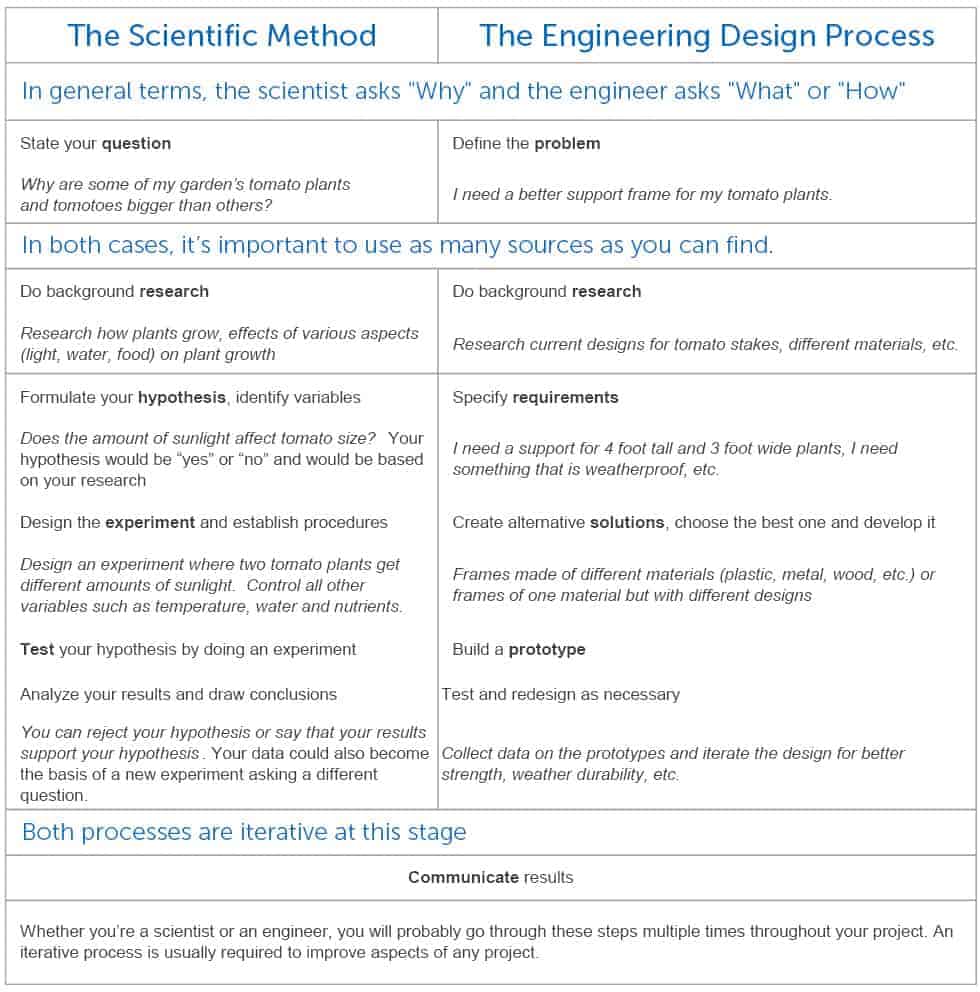
If your project involves designing, building, and testing something, you should probably follow the Engineering Design Process. If you still are not sure which process to follow, you should read Comparing the Engineering Design Process and the Scientific Method. We refer to these steps as “the engineering design process,” but this system can be used for all types of creative problem-solving, from the arts to psychology.
Steps of the engineering design process
Engineers are known for making new products or fine-tuning things that someone else may have made and tested. In their work, they often apply concepts the scientists have already learned. Presentation, a Microsoft® PowerPoint® file, to teach the lesson. Have ready a computer/projector with Internet access to also show students an online vide and a website. In advance, make copies of the Engineering & Design Pre/Post Quiz (two per student), provided both as attachments and slides, and the What Is Engineering? Students investigate Python and Jupyter Notebook to analyze real astronomical images in order to calculate the interstellar distance to a star cluster across the Milky Way from our own Solar System.
And for more articles like this, be sure to sign up for our free newsletters to find out when they’re posted!
Students work within constraints to construct model trusses and then test them to failure as a way to evaluate the relative strength of different truss configurations and construction styles. Within each group, each student builds two exact copies of the team's truss configuration using his/her own ... Student pairs design, redesign and perform simple experiments to test the differences in thermal conductivity (heat flow) through different media (foil and thin steel).
Force and Motion Unit! STEM Challenge:Designing a Playground.
Working individually or in pairs, students compete to design, create, test and redesign free-standing, weight-bearing towers using Kapla® wooden blocks. The challenge is to build the tallest tower while meeting the design criteria and minimizing the amount of material used—all within a time limit. Students learn how to use wind energy to combat gravity and create lift by creating their own tetrahedral kites capable of flying.
Click here for an editable STEM journal to use with distance learning, including digital and printable versions. Learn more about The Works’ teacher resources and outreach programs. Download further ideas from The Works that suggest ways to integrate engineering into an elementary school curriculum; each is aligned to the 2009 standards. You can make learning interactive and fun by using cool tech tools like interactive whiteboards and 3D modeling software. Use any feedback you get to tweak and improve your design until it’s the best it can be. The kids shell the peas, snap the ends off the green beans, and cut the softer foods requiring only a table knife.
Activity Extensions
Use the Investigating Questions to lead a class discussion about how to recognize the need and identify a target audience for a hypothetical engineering project. Students learn how to send signals (such as from buttons or sensors) from one system to another using XBee radio communication modules. By activity end, they are able to control LEDs and motors wirelessly using Arduino microcontrollers and XBee shields. Students imagine they are stranded on an island and must create the brightest light possible with the meager supplies they have on hand in order to gain the attention of a rescue airplane. In small groups, students create circuits using items in their "survival kits" to create maximum voltage, measu... Students design, build and evaluate a spring-powered mouse trap racer.
Students further their understanding of the engineering design process while combining mechanical engineering and bio-engineering to create assistive devices. During this extended activity (seven class periods), students are given a fictional client statement and required to follow the steps of the ... Students apply their knowledge of scale and geometry to design wearables that would help people in their daily lives, perhaps for medical reasons or convenience.
The skills learned in engineering are useful in many facets of everyday life. On the first page of the worksheet, the students are presented with a chart of the engineering design process. The names of the steps are given in the proper order, but the boxes for the descriptions are left blank. If you are new to teaching STEM or the engineering design process, this resource has everything you need to understand the EDP and how to implement it with your students.
13 Engineering Apps That Are a Must for All Engineers - Interesting Engineering
13 Engineering Apps That Are a Must for All Engineers.
Posted: Fri, 16 Oct 2020 07:00:00 GMT [source]
Build a model race car out of lifesaver candies, popsicle sticks, straws, and other fun materials! Have students learn about independent, dependent, and control variables, and find out who can make the fastest car given their new knowledge. Design a customized table top supply organizer inspired by the natural home of a ladybug—or any other insect of a student's choosing—to hold all of their classroom supplies! By the end of this activity, students will understand the properties of biomimicry and the engineering design process.
Look at whether each possible solution meets your design requirements. Design requirements state the important characteristics that your solution must meet to succeed. One of the best ways to identify the design requirements for your solution is to analyze the concrete example of a similar, existing product, noting each of its key features. Students must apply their knowledge and reasoning to determine which description corresponds with which step, then to write out each description in the appropriate box. This exercise reinforces the idea of a step-by-step design process. Give each team a copy of the Defining the Problem Worksheet.
Students learn the steps of the engineering design process (EDP) and how to use it ... In this two-part activity, students design and build Rube Goldberg machines. This open-ended challenge employs the engineering design process and may have a pre-determined purpose, such as rolling a marble into a cup from a distance, or let students decide the purposes.
Students use Arduino microcontrollers and light-sensitive resistors (photocells) to sense the ambient light levels in a room and turn LEDs on and off based on those readings. They are challenged to personalize their basic night-lights with the use of more LEDs, if/else statements and voltage divider... Students learn how engineering design is applied to solve healthcare problems by using an engineering tool called simulation.
This activity uses the engineering design process to build the cooler as well as to measure ... Students experience the engineering design process as they design and build accurate and precise catapults using common materials. They use their catapults to participate in a game in which they launch Ping-Pong balls to attempt to hit various targets.
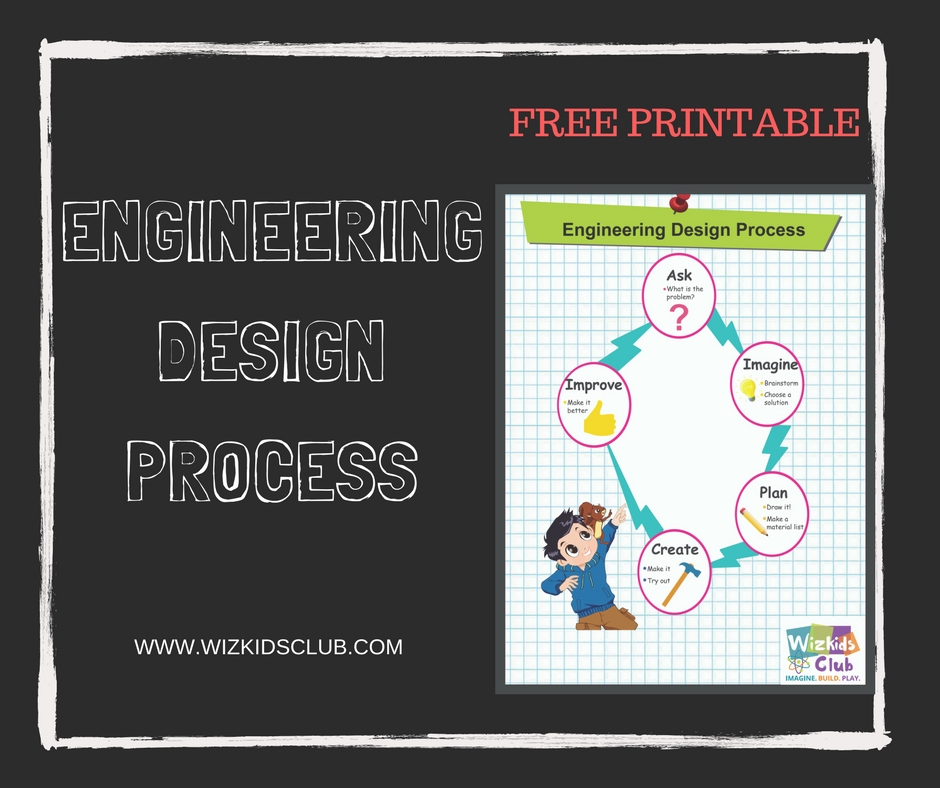
The following description of each step in the EDP provides a quick glimpse into what the primary focus is in each part of the process. For helpful worksheets for your mini-engineers to apply the EDP to a design challenge as well as an engaging design activity to practice with, check out the freebie linked at the end of this post. Student teams follow the steps of the engineering design process as they design and build architecturally inspired cardboard furniture. Given a list of constraints, including limited fabrication materials and tools, groups research architectural styles, brainstorm ideas, make small-scale quick proto... Using ordinary classroom materials, students act as biomedical engineering teams challenged to design prototype models that demonstrate semipermeability to help medical students learn about kidney dialysis. A model consists of two layers of a medium separated by material acting as the membrane.
Maple 13, MapleSim 3 Boost Design Process - Digital Engineering 24/7 News
Maple 13, MapleSim 3 Boost Design Process.
Posted: Thu, 20 Sep 2018 07:00:00 GMT [source]
For evaluation, teams equip their racers with an intelligent brick from a LEGO© MINDSTORMS© EV3 Education Core Set and a HiTechnic© acceleration sensor. Students control small electric motors using Arduino microcontrollers to make little spinning fans made with folded and glued paper sticky notes. They build basic circuits and modify code, before applying the principles to create their own more-complicated motor-controlled projects. Students design and create their own nano-polymer smartphone case. Students choose their design, mix their nano-polymer (based in silicone) with starch and add coloring of their choice.

Students extend the ideas learned in the maze challenge with a focus more on the robot design. To conclude, conduct the post-activity assessment described in the Assessment section to help students relate the project to some aspect of their own lives. This role-reversal exercise asks students to imagine they are members of the target population and develop three questions that they would ask the project engineers.
Comments
Post a Comment